Being a Local Musician may be a great GIG business that can earn $200/$300+ a night but, like any business, there are up front and operating expenses. Depending on what you already have, and what you need… may require an investment of $500 to $2000, or more, in start up costs.
Just want to take your guitar skills to a higher level or go busking on a street corner with an acoustic guitar? You can teach yourself the Quantum Guitar method by watching my demo videos.
If you want to be a live performer, be patient, take your time, and practice. As a SoloBand performer you may need some of the following equipment and software to play midi files live on stage. I personally use this equipment on stage and find it affordable and effective.
BTW: A lot of bands shut down in the 1980s and you might find what you need online or at yard sales near your home.
A Windows Laptop computer (XP or newer)You need a portable laptop to play the backing tracks live on stage. You don’t want to be dragging a heavy tower computer around. Personally, I’m using a second hand Windows XP laptop for all my stage work. (I also carry a spare laptop when I play out of town) You can use an older Windows laptop because that’s all the MIDI software below needs.
A USB Foot Pedal. This is used to easily start playing a song when you are ready. It’s more convenient than tapping a key. (Amazon has these for around $20)
Midi Software:
1. VanBasco’s Midi Player – used to organize and manage your midi play lists. This software has been discontinued… but I have a free copy.
2. Able Midi Editor – Used to modify midi songs such as changing the song key (from “E” to “G” etc.) to match your vocal range.
This software is priced at $24.90
Sound Equipment:
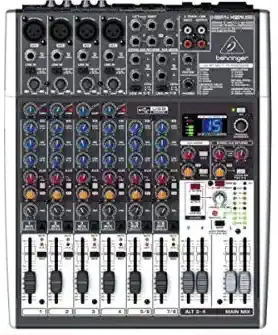
An 8 or 12 Input Mixer. A mixing control board to manage your microphone, electric guitar and midi background music inputs. This unit controls your volume, bass, mid range and treble (with any special effects like echo) and sends its output signal to your output audio amplifier. I use and recommend the Behringer model X1204USB (smaller units are available)
An 8 or 12 Input Mixer. A mixing control board to manage your microphone, electric guitar and midi background music inputs. This unit controls your volume, bass, mid range and treble (with any special effects like echo) and sends its output signal to your output audio amplifier. I use and recommend the Behringer model X1204USB (smaller units are available)
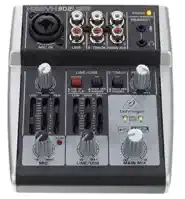
A Computer/USB interface. This USB interface unit sends the song playing on the VanBasco’s Midi Player through your computers USB port to your mixing control board. This process not only produces a better quality sound, it also allows you to control the volume, bass, mid range and treble of the backing tracks. I use and recommend a Behringer model 302USB mixer because it has controls for USB input/output
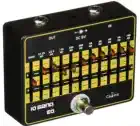
A 10-Band EQ equalizer. This unit is used to control the sound of the midi background output. Normally you would want to cut the Bass and Treble.. and accent the Mid range. Most local venues are not set up to acoustically handle deep Bass. A 10 Band EQ box allows you to sculpt your background so it sounds better. I also use one of these to manage my guitar and mike output sound. I use and recommend a Caline USA, model CP-24 effects pedal.
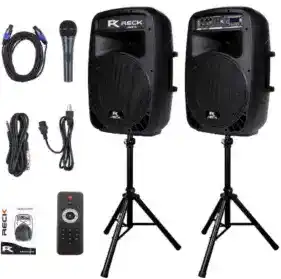
A 10 or 12 inch Powered PA system. so the audience can hear your music. For the best live sound, try and get the best system you can afford.
PA systems come in various configurations, floor mount and pedestal mount. These units range from about $400 to over $1000.
Unfortunately, I can’t recommend any of these units selling on Amazon because I have a used Bose L1 compact system that cost over $2000.
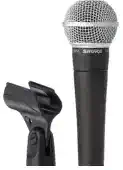
•A good quality microphone to get the best vocal reproduction I am using a Shure SM58 that I really like and recommend.
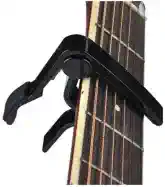
•A Quick Change CAPO is required to get the most out of the SoloBand system.
For Fast, Single-String Picking
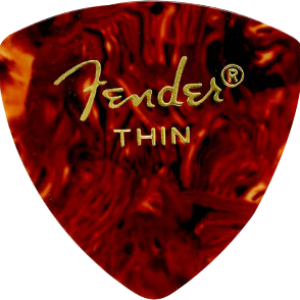
I’ve always used classic, three-corner, thin, celluloid guitar picks. A thicker or heavier style pick is not flexible enough for really fast staccato picking. The downside, these picks sometimes break under heavy use. That’s why I want a three-corner pick while playing on stage, so buy a dozen at a time.
Get A Suitable Guitar
To play for 50 or more people, local musicians need a regular or acoustic electric guitar. Plug it into your mixer instead of an amp to reduce your carry on and set up.
For working as a local musician, there is no need to spend more than a couple hundred dollars on a guitar… Don’t forget yard sales and pawn shops to keep costs down. When spending money, it’s better to spend a bit more, having a guitar shop properly set up your guitar.
For Acoustic Guitars
Unless you are a very big person only get a 3/4 size acoustic
For Electric Guitars Electric guitars tend to be a bit heavy, so make sure you have a good shoulder strap for gigs that could last up to 4 hours.
BTW: Because of the way I play my guitar (playing notes instead of strumming or playing lead guitar riffs), I use mellow flat wound strings on my guitar to reduce the overtones as much as possible.