

Guitars, A Brief History
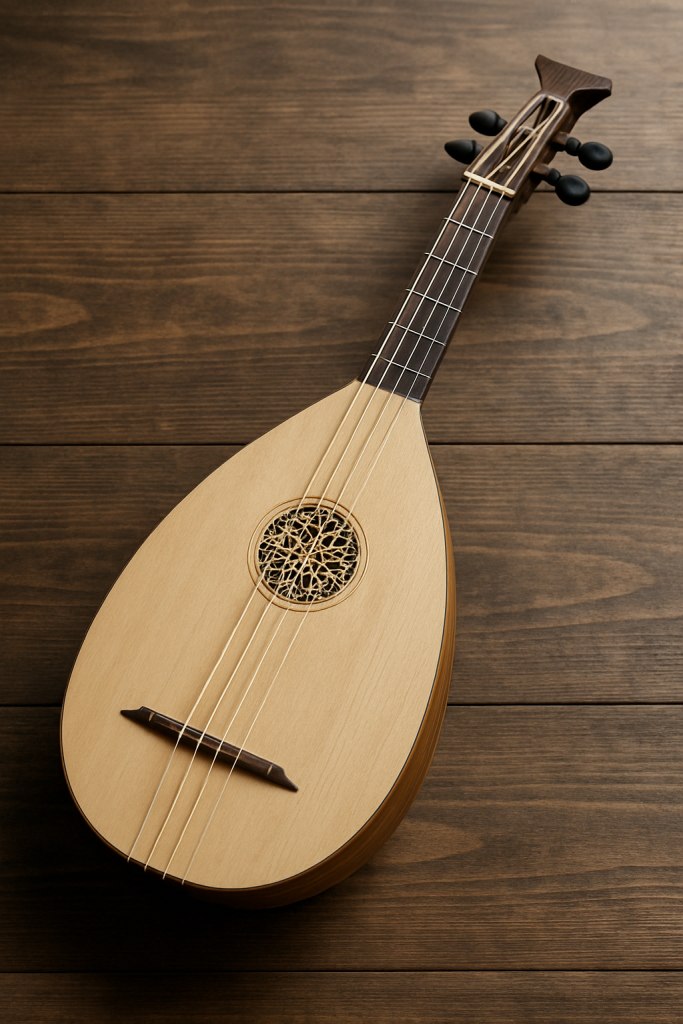
Starting out as a 4 stringed potbellied lute, the common guitar has a very colorful and checkered past. From the sands of the Middle East to the largest live concerts in the world.
Read this fascinating Bio of the common Guitar.

Historians believe the guitar originated in ancient Mesopotamia or Egypt around 2000–1500 BC, evolving from earlier four-stringed instruments like the lute and oud.
During medieval times (12th to 15th centuries), the guitar was a four-stringed instrument with a rounded back known as a lute. It was widely used throughout Europe by minstrels, troubadours, and common musicians, many of whom roamed the countryside, playing music for fun and profit.
The first modern guitar form was created by the Spanish luthier Antonio de Torres Jurado around 1850 in Almería, Spain, establishing the design that evolved into today’s six-string classical guitar.
Before the Industrial Revolution (late 1700s to early 1800s), guitar strings were typically made from animal gut, usually sheep or cow intestines. The process involved cleaning, soaking, twisting, and drying the gut to form strong, flexible strings. Higher-pitched strings used thinner strands, while lower-pitched strings were thicker or sometimes wound with thin metal wire (usually silver, copper, or brass) in a tight spiral. This was painstaking work usually done by skilled string makers. This slow and expensive process was used until the Industrial Revolution.
“Due to their low sound volume and mellow tone, guitars were traditionally considered the musical instrument of the ‘common’ people and were never used by classical musicians or orchestras. The guitar’s low esteem persisted until the late 1940s and early 1950s, when the use of electronic amplifiers transformed the music industry forever. Rock on!”